What floor coating works for a Stoughton warehouse or shop floor that can't shut down for long?
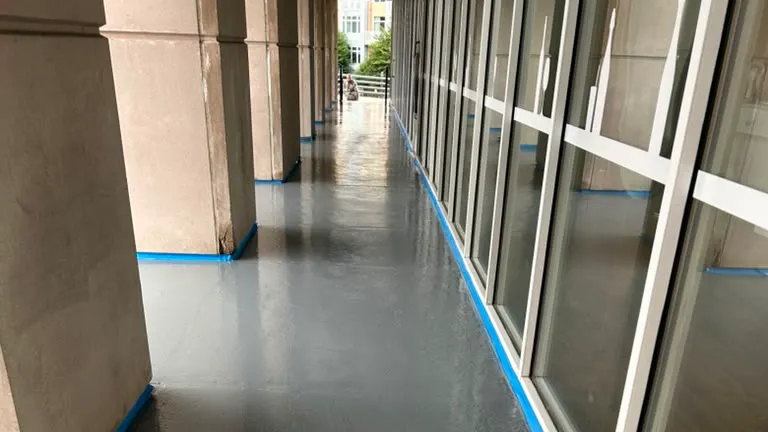
For a facility manager in Stoughton or anywhere in Eastern Massachusetts, the hardest part of a floor coating project is not choosing a color. It is finding a window when the floor can be out of service. Warehouses, shops, maintenance bays and back-of-house corridors rarely get a full week off. The good news is that modern commercial floor coating systems can be matched to the shutdown you actually have, as long as the prep is done right.
Which coating systems return a floor to service fastest?
There are three families of floor coatings that come up on most facility jobs, and the main difference between them is cure time:
- Standard epoxy. Thick, hard and chemical resistant, but slow. Most systems need a day or more between coats and several days before heavy traffic, and they cure slowly in a cold building.
- Polyaspartic. Cures in hours, tolerates lower temperatures, and resists UV yellowing. It allows multiple coats in one shift, so a zone can often be coated and back in light use the next morning.
- Hybrid systems. An epoxy primer or base for build and penetration, with a fast-cure polyaspartic or urethane topcoat for wear and quick turnaround.
For a floor that must reopen quickly, a polyaspartic or hybrid fast-cure floor coating system is usually the right answer. Where a slab sees heavy chemical exposure or hard-wheeled carts, we may build up a thicker epoxy base in the zones that need it and use fast-cure material elsewhere.
How does a phased install keep the building running?
Instead of closing the whole floor, we divide it into zones that match how your building operates: aisles, bays, corridors, or areas between racking. A typical plan looks like this:
- Walk the floor with the facility team and map zones, traffic routes and equipment that has to move.
- Grind and repair one zone at a time, with dust control.
- Coat each zone on a night or weekend, then hand it back with a written return-to-service time.
- Move to the next zone while operations shift around the work.
Joints and transitions between zones are planned in advance so they fall at control joints or doorways rather than in the middle of a traffic lane.
Why does surface prep decide how long the floor lasts?
Every coating failure we are called to look at comes back to prep. Coatings bond mechanically, so the slab needs a profile. We diamond-grind or shot-blast to open the surface, remove old coatings, curing compounds, oil and contamination, then repair cracks, spalls and joints so they do not telegraph through. A coating rolled over a smooth, dusty or oily slab peels in sheets under forklift traffic.
Moisture is the other big one. Slabs on grade in New England, especially in buildings near wetlands or with a high water table, can push water vapor up through the concrete. That vapor lifts coatings from underneath. We test the slab before choosing a system and use a moisture-tolerant primer where readings call for it. Salt is a factor too: overhead doors and loading areas pick up road salt all winter, which is one more reason to seal those areas rather than leave bare concrete. The same road salt damage that pits garage floors shows up at loading doors.
Is winter a good time to coat a facility floor?
Often it is. Floor coating is interior work, so the weather outside matters less than the slab and air temperature inside, which we check before every pour. Fast-cure systems are well suited to cooler buildings. Many facilities also have slower periods in winter that make the zone schedule easier. If the floor has cracked or spalled areas that need structural attention first, those can be handled with concrete crack repair as part of the same prep.
What should a facility manager do first?
Start with a walk-through. We offer a free on-site assessment in Stoughton where we look at the slab condition, joints, moisture risk and how the space is used, then recommend a system and a phased schedule that fits your operations. You get a written proposal with zones, sequence and return-to-service times, so you can plan around the work instead of the other way around.
A floor coating only pays off if it stays bonded, and that comes down to choosing the right system and doing the prep properly. Concrete Solutions & Waterproofing serves homeowners, condo associations and facility managers across Eastern Massachusetts, Rhode Island and Southern New Hampshire.
Key takeaways
- Fast-cure polyaspartic and hybrid systems let a warehouse or shop floor return to light service within about a day.
- Phased installs, one zone at a time over nights or weekends, keep the building running.
- Grinding, joint and crack repair, and a moisture test decide whether a coating stays bonded.
- Standard epoxy still fits zones that need thick build and heavy chemical resistance.
- Winter is often a good time to coat interior floors, as long as slab temperature and moisture are checked.