Why is my garage floor flaking and pitting, and can it be repaired in Quincy?
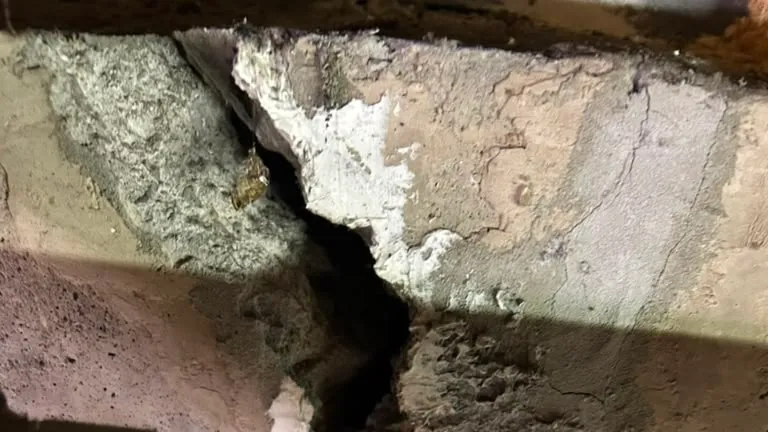
If you park in a garage in Quincy, you have probably watched the floor get rougher every winter: a gritty surface under the tires, shallow craters near the door, and patches where the top layer has simply let go. This kind of damage has a clear cause, and in most cases it can be fixed without tearing the whole floor out. Our garage slab repair service starts by figuring out which situation you are in, because the fix depends on how deep the damage goes.
What causes a garage floor to flake and pit?
The short version is salt and water working together through a New England winter. Every time you pull in, slush packed with road salt drips off the wheel wells and melts onto the same strips of concrete. Salt does two things. It draws more water into the surface of the slab, and it keeps that water cycling through freezing and thawing more often. Water expands as it freezes, and over dozens of freeze-thaw cycles a season that pressure breaks the top layer of concrete apart.
Concrete people call the flaking scaling and the deeper craters spalling or pitting. You usually see it:
- In two strips where the tires sit, and worst near the overhead door
- Around the floor drain or any low spot where meltwater collects
- On older slabs, especially ones poured decades ago
- Where a previous paint or sealer has worn through
Older housing stock makes this more common around Quincy and the South Shore. A lot of garage floors were poured before air-entrained concrete was standard. Air entrainment puts millions of tiny bubbles in the mix that give freezing water room to expand. Slabs without it scale much faster once salt gets involved.
Can a flaking garage floor be repaired instead of replaced?
Often, yes. Scaling and shallow pitting live in the top layer of the slab. If the concrete underneath is still sound, the floor can be brought back with a resurfacing process:
- Diamond-grind the floor to remove the scaled, salt-contaminated surface and any old paint or sealer.
- Clean out and repair cracks and fill deeper spalls with a repair mortar.
- Install a bonded, polymer-modified cement resurfacing layer over the prepared slab.
- Seal or coat the new surface so salt has a harder time getting back in.
The grinding step matters most. Any coating or overlay put down over weak, salty concrete will let go, which is why paint over a pitted floor peels so quickly. Grinding down to sound concrete gives the new layer something to hold onto.
When does the slab need to be replaced?
Resurfacing fixes the surface. It cannot fix a slab that is failing underneath. We recommend replacing the garage slab when we find:
- Cracks where one side sits higher than the other, or sections that rock when you walk on them
- A floor that has sunk so water now runs toward the house instead of out the door
- Spalls deep enough to expose rusting reinforcing steel
- Damage across most of the floor, where repairing it costs close to replacing it
A full replacement means breaking out the old slab, correcting the gravel base and the drainage, and pouring new air-entrained concrete pitched toward the door. For a closer look at that decision, see our guide on whether to resurface or replace a cracked garage slab.
How do you keep a repaired garage floor from flaking again?
The fix only lasts if you stop salt from soaking back in. The most effective protection is a coating. An epoxy or polyaspartic garage floor coating seals the surface so salty meltwater sits on top and can be squeegeed out instead of soaking in. If you would rather keep a bare concrete look, a penetrating sealer reapplied every few years helps. Beyond that, a few habits make a real difference:
- Squeegee or sweep out slush during long cold stretches instead of letting it sit.
- Keep the floor drain and the area by the door clear so water can leave.
- Avoid de-icers on the garage floor itself. They are what is doing the damage.
When should you call a contractor?
You can tell scaling from a glance. What you cannot easily tell is how deep it goes, whether the slab is moving, and whether the base underneath is wet or settling. That is what decides between a resurfacing job and a replacement, and guessing wrong is expensive either way. We offer a free on-site assessment in Quincy, where we check the depth of the damage, the drainage, and how the slab is behaving before we recommend anything. The work is inside the garage, so it can be scheduled through the winter.
If your garage floor is flaking, the sooner you deal with it, the more likely it is that a resurfacing will do the job instead of a full tear-out. Concrete Solutions & Waterproofing serves homeowners, condo associations and facility managers across Eastern Massachusetts, Rhode Island and Southern New Hampshire.
Key takeaways
- Flaking and pitting garage floors are usually caused by road salt and freeze-thaw breaking up the top layer of concrete.
- Older slabs poured without air-entrained concrete scale much faster.
- If the slab is sound and level, grinding and a bonded resurfacing layer can restore it.
- Slabs that move, have sunk, or show deep spalls with exposed steel should be replaced.
- A coating or sealer after the repair keeps salt from soaking back in.