
Will hydraulic cement stop a leaking basement wall?
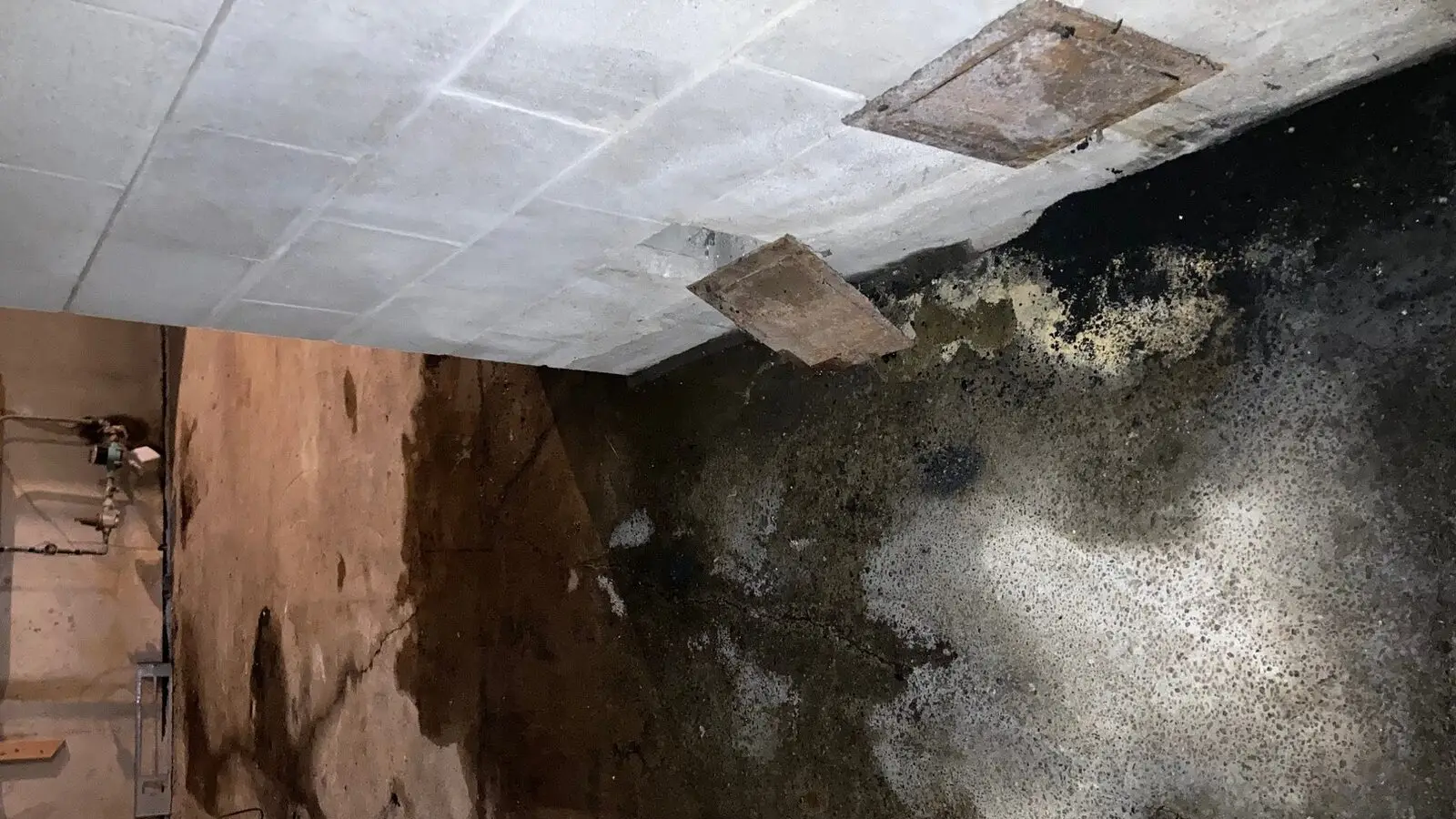
Hydraulic cement is one of the most searched basement repair products in Eastern Massachusetts, and for good reason: it is cheap, it is on the shelf at every hardware store, and it can stop running water in minutes. Whether it is the right fix depends entirely on where the water is coming in. Here is how we decide, after years of basement waterproofing work on poured, block and fieldstone foundations across the region.
What is hydraulic cement, and why does it stop water?
Hydraulic cement is a fast-setting cement that cures even when it is wet. Two properties make it useful on leaks:
- It sets in minutes. Most products harden within a few minutes of mixing, fast enough to be pressed into a hole that is actively running water.
- It expands as it cures. Pressed into a hole that has been cut wider at the back than at the face, it locks itself in place as it hardens.
That makes it a plug. It is very good at filling a defined opening and holding back water at that spot.
When does hydraulic cement work?
We use it ourselves, in the right places:
- Active leaks that need to stop now. A tie hole, a pipe penetration or a joint that is running water during a storm can be plugged so the permanent repair can go in.
- Holes and voids with solid edges. A hole that has been chiselled out to sound concrete and undercut, then packed solid, gives the cement something to lock into.
- Some outside crack repairs. When a crack in a poured wall cannot be reached from inside, we hand dig along it below grade, clean it out, and fill it with hydraulic cement above and below grade before backfilling. Working from the outside, the water is stopped at the face where it enters.
Why does hydraulic cement fail on basement wall cracks?
Most failed patches we see are hydraulic cement smeared over the inside face of a crack in a poured foundation. They fail for predictable reasons:
- It is rigid, and the crack is not. Foundation cracks open and close slightly with frost, temperature and the spring water table. A rigid patch cannot move with them, so it cracks or lets go at the edges.
- It only seals the surface. The crack runs through the whole thickness of the wall. Water still travels through the crack inside the wall, reaches the edge of the patch, and comes out beside it.
- It does not bond well to a smooth face. Pressed onto a flat wall instead of into an undercut opening, it has little to hold onto.
The result is a familiar pattern in older Massachusetts basements: one crack with two or three generations of patches on it, each a little bigger than the last. The water was never stopped, only moved over a few inches.
What lasts longer for a leaking crack in a poured wall?
For a crack in a poured concrete wall, the lasting repair is injection. Resin is pumped through ports along the crack until it fills the crack through the full wall thickness, so there is no path left for water to follow. Polyurethane is used for cracks that leak, because it reacts with water and stays flexible; structural epoxy is used for dry cracks that need the wall bonded back together. Our page on foundation crack injection explains the difference in detail.
Old patches have to be ground off before the ports can be set, so if you plug a crack as a stopgap before a nor'easter, keep the patch small.
What if the water is coming in everywhere?
Hydraulic cement and crack injection both treat one spot. If water is showing up along the base of every wall after heavy rain or the January thaw, the problem is groundwater pressure, not a single crack, and no patch will hold it back. That calls for an interior perimeter drain and sump as part of a full basement waterproofing system. If water is coming up through the floor in winter, our post on water on the basement floor in winter walks through the causes.
Fieldstone and block foundations are different again. They leak through mortar joints and hollow block cores across the whole wall, so the fix is repointing the stone or block and, where needed, drainage at the base.
Before recommending anything, we trace where the water is actually entering on a site visit, because the right fix for a tie hole and the right fix for a high water table are very different jobs.
Concrete Solutions & Waterproofing serves homeowners, condo associations and facility managers across Eastern Massachusetts, Rhode Island and Southern New Hampshire.
Key takeaways
- Hydraulic cement is a plug: it sets in minutes and expands, so it is good for stopping running water at a hole, tie hole or joint.
- It is a poor permanent fix for a crack in a poured wall, because it is rigid and only seals the surface.
- Leaking poured-wall cracks last longest when injected through the full wall thickness, usually with polyurethane.
- Water along every wall points to groundwater pressure, which needs a drain and sump, not patches.
- Fieldstone and block walls need repointing and drainage, not spot plugging.