Concrete Solutions & Waterproofing finds where water is getting into your basement and builds the fix that matches it: an interior perimeter drain and sump, sealed cracks and wall penetrations, a rebuilt bulkhead, or a combination. We work on poured concrete, block and old fieldstone foundations for homeowners and condo associations across Eastern Massachusetts.
Free written estimates. Licensed and insured. Standard 1-year warranty.
Almost every wet basement comes down to one of a few entry points: the joint where the wall meets the floor, cracks or penetrations in the wall, water pushing up through the slab, a leaking bulkhead, or condensation. Where the water shows up tells you which one it is.
| What you see | Likely source | Usual fix |
|---|---|---|
| Water along the base of the walls after heavy rain or snowmelt | Hydrostatic pressure at the wall-to-floor (cove) joint | Interior perimeter drain to a sump |
| Water running from one crack or one spot on the wall | Foundation crack, tie hole or pipe penetration | Crack injection or sealing the penetration |
| Water coming up through cracks in the floor | High water table under the slab | Perimeter drain and sump to relieve the pressure |
| Wet walls all over a block or fieldstone foundation | Water passing through porous masonry and failed mortar | Repointing or parging plus drainage; see fieldstone foundation repair |
| Water at the basement stairs or exterior door | Leaking or failed bulkhead | Bulkhead repair or replacement |
| Damp walls and a musty smell in summer, no puddles | Condensation from humid air on cool walls | Humidity control, not a drain system |
White, chalky deposits on the walls (efflorescence) mean water has been moving through the masonry and leaving minerals behind as it dries. Rust stains, peeling paint and a tide line on stored boxes are the other common clues. On the first visit we trace the water before recommending anything, because the wrong fix in the wrong place does not stop it.
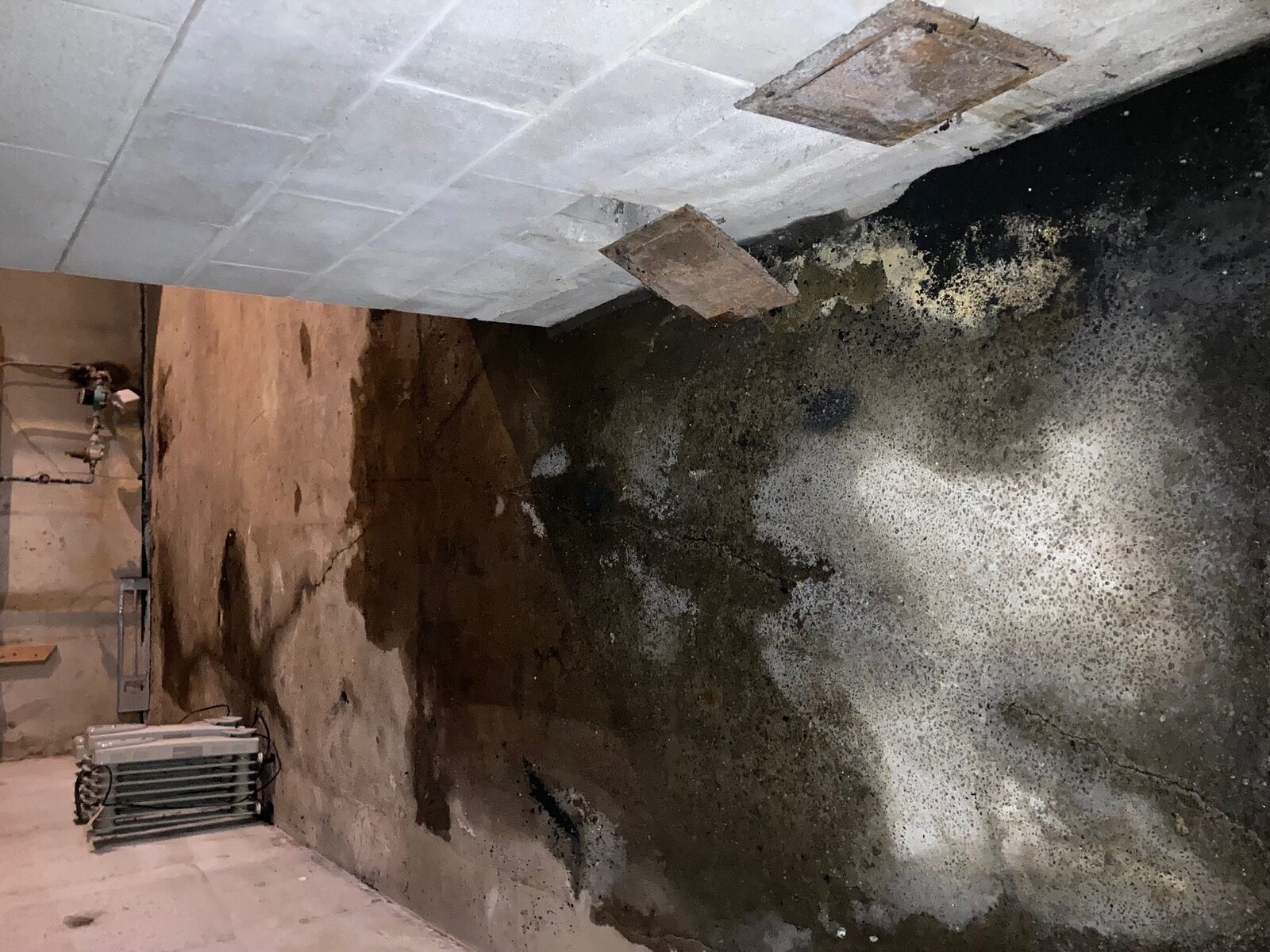
Most wet basements are fixed from the inside with a perimeter drain and sump, which costs far less than digging up the outside of the house. Exterior excavation is for walls that have failed structurally or water problems that only grading and outside work can solve.
An interior system does not stop water from reaching the outside of the wall. It intercepts the water at the footing, where it would otherwise push in at the cove joint or up through the slab, and carries it to a sump that pumps it out. That handles the most common cause of wet basements in this area, which is groundwater pressure during spring thaw and long storms.
Outside work is worth it when:
We will tell you when the lighter fix will work, and when it will not.
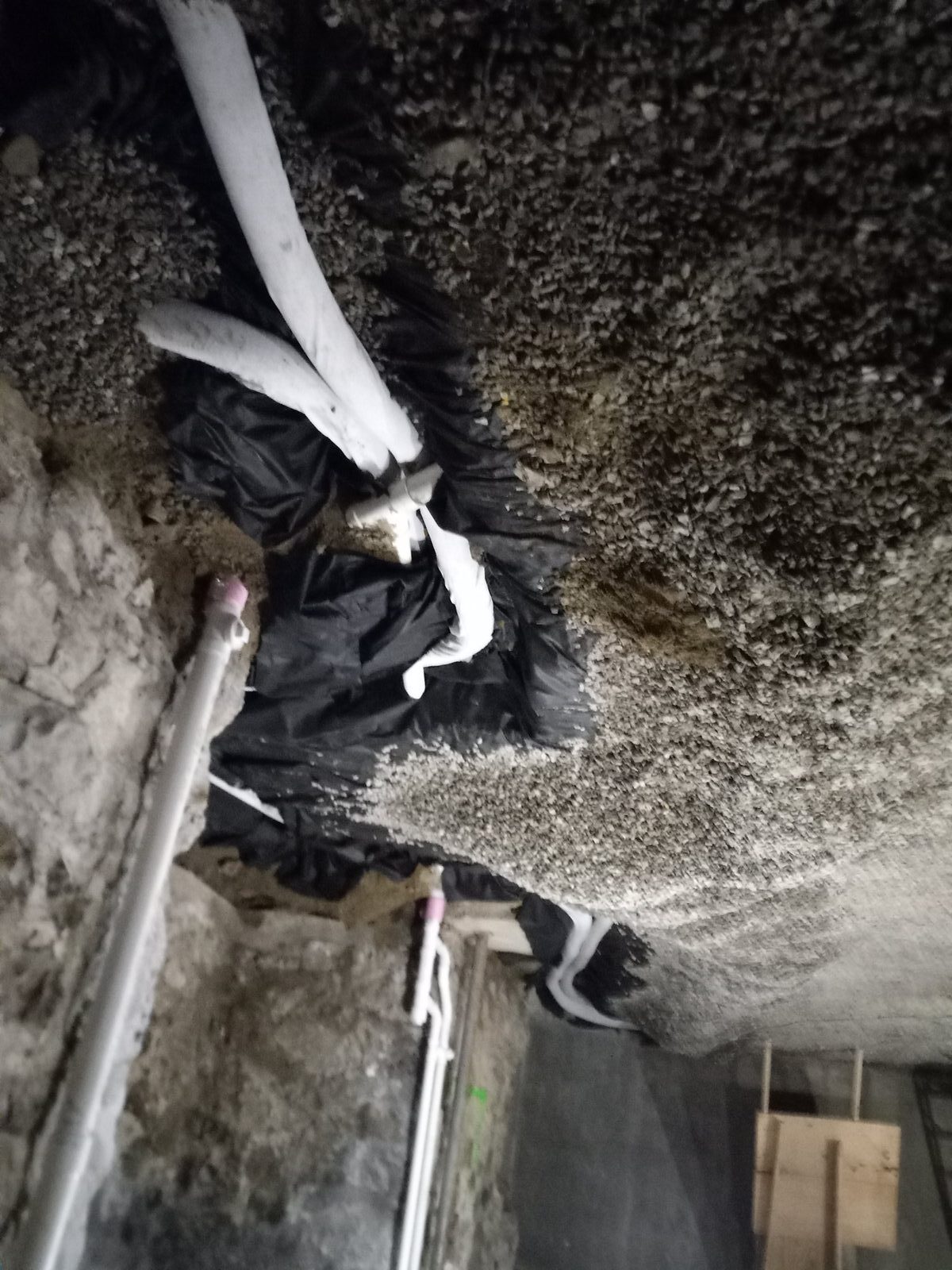
We cut out a strip of the basement floor along the walls, dig a trench down beside the footing, lay perforated pipe in clean stone, route it to a sump basin, and pour the floor back. Wall seepage is channeled down into the drain.
Most single-family basements take a few days, depending on the length of wall, how hard the existing floor is to cut, and how much stone or ledge is under it.
If you have an interior drain, yes: the sump is where the water goes. A battery backup is worth it in New England because the heaviest water arrives with nor’easters and spring storms, the same events that knock out power.
Already have a pump that runs constantly, is noisy, or has failed? See sump pump installation and replacement.
Often, yes. If water comes in at one crack, one tie hole or one pipe penetration, sealing that spot is the right fix and costs a fraction of a perimeter drain.
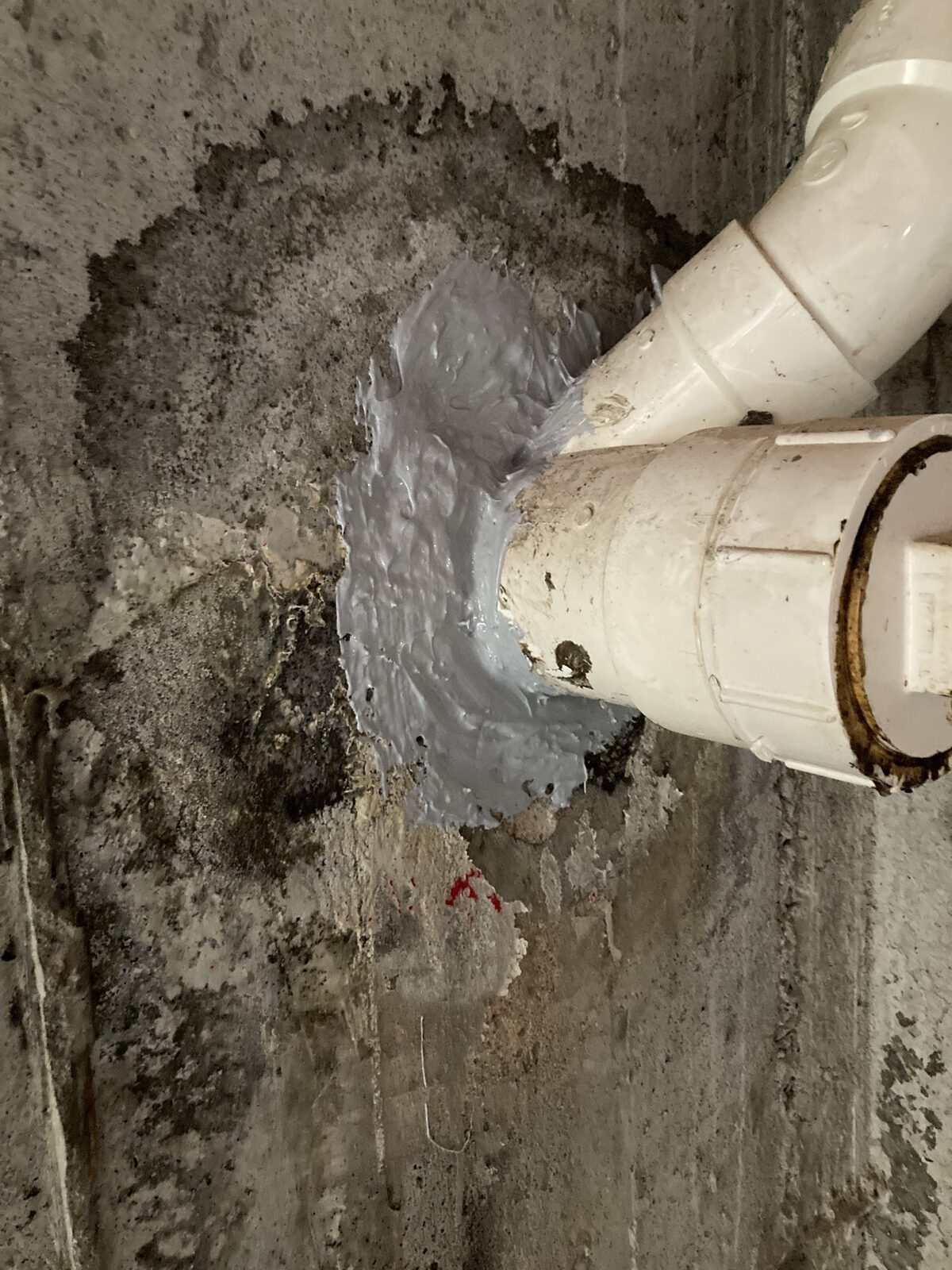
Poured concrete foundations commonly leak at a few predictable points: shrinkage cracks, the tie holes left by the forms, and the places where water, sewer, oil or gas lines pass through the wall. These are sealed from the inside:
What does not work is painting a "waterproof" coating over a wall that has water pushing through it. The water stays in the wall, the coating peels, and the leak finds another way in.
Many homes on the South Shore and in Norfolk County sit on fieldstone or block foundations built before modern drainage. These walls let water through in more places, so they usually need both masonry repair and drainage.
Each town page below shows the local housing age from Census data, which is a good hint at what kind of foundation most homes in that town have.
The bulkhead is one of the most common leak points in Massachusetts basements. Rusted steel doors, failed seals and cracked concrete stairwells let water run straight down into the basement.
We repair and reseal bulkhead stairwells, replace rusted doors, and rebuild failed concrete steps and side walls. Where a bulkhead is beyond repair we replace it, and where none exists we can cut in a new one. See bulkhead replacement and bulkhead installation. Bulkhead work is often done together with an interior drain, so water that does get in has somewhere to go.
It depends mostly on which fix the basement needs: sealing one or two leaks costs least, a full perimeter drain with a sump costs the most, and bulkhead or masonry work falls in between. We give a written, itemized estimate after seeing the basement.
| Work | Typical range | Notes |
|---|---|---|
| Interior perimeter drain | About $70 to $120 per linear foot | Drain pipe and stone only; with pits and pumps included, about $140 to $180 per foot |
| New sump pit and pump | About $1,250 to $3,150 | Pump-only replacement about $725 to $850; discharge line about $900 to $1,300 extra |
| Interior crack injection | About $750 to $2,100 per job | Most single-crack and two-crack jobs; more and longer cracks cost more |
| Interior wall coating or parging | About $4 to $11.50 per square foot | Higher end is stone-wall slurry and membranes |
| Bulkhead leak sealing | About $750 to $2,450 | Resealing the bulkhead base and joint to the foundation |
Ranges come from our own written proposals for Eastern Massachusetts jobs in 2025 and 2026. They are a guide, not a quote: your price depends on what we find on site.
The main things that move the price:
Interior waterproofing is indoor work, so it can be scheduled through the winter, ahead of spring thaw.
We don't publish client names or addresses.
We waterproof basements across Eastern Massachusetts, from Braintree and the South Shore through Norfolk County and south toward Plymouth and Bristol counties. Pick your town for local details, recent nearby jobs and the building department contact. Our office is at 150 Grossman Drive, Suite 205, Braintree, MA 02184.
Tell us about the project and where it is. We respond within one business day.