
Concrete Solutions & Waterproofing repairs cracked and leaking poured concrete foundations by injecting resin through the full thickness of the wall from inside the basement: flexible polyurethane for cracks that leak, rigid structural epoxy for dry cracks that need strength restored. Where a crack cannot be reached from inside, we dig down and seal it from outside.
Free written estimates. Licensed and insured. Standard 1-year warranty.
Almost every poured foundation cracks. Concrete shrinks as it cures, and the wall relieves that stress by cracking, usually vertically near windows, corners and form lines. Most of these cracks are not structural, but they are the most common way water gets into a basement.
Horizontal cracks, or a wall that bows or leans, are a different problem. Those need an engineer's evaluation first; see foundation repair.
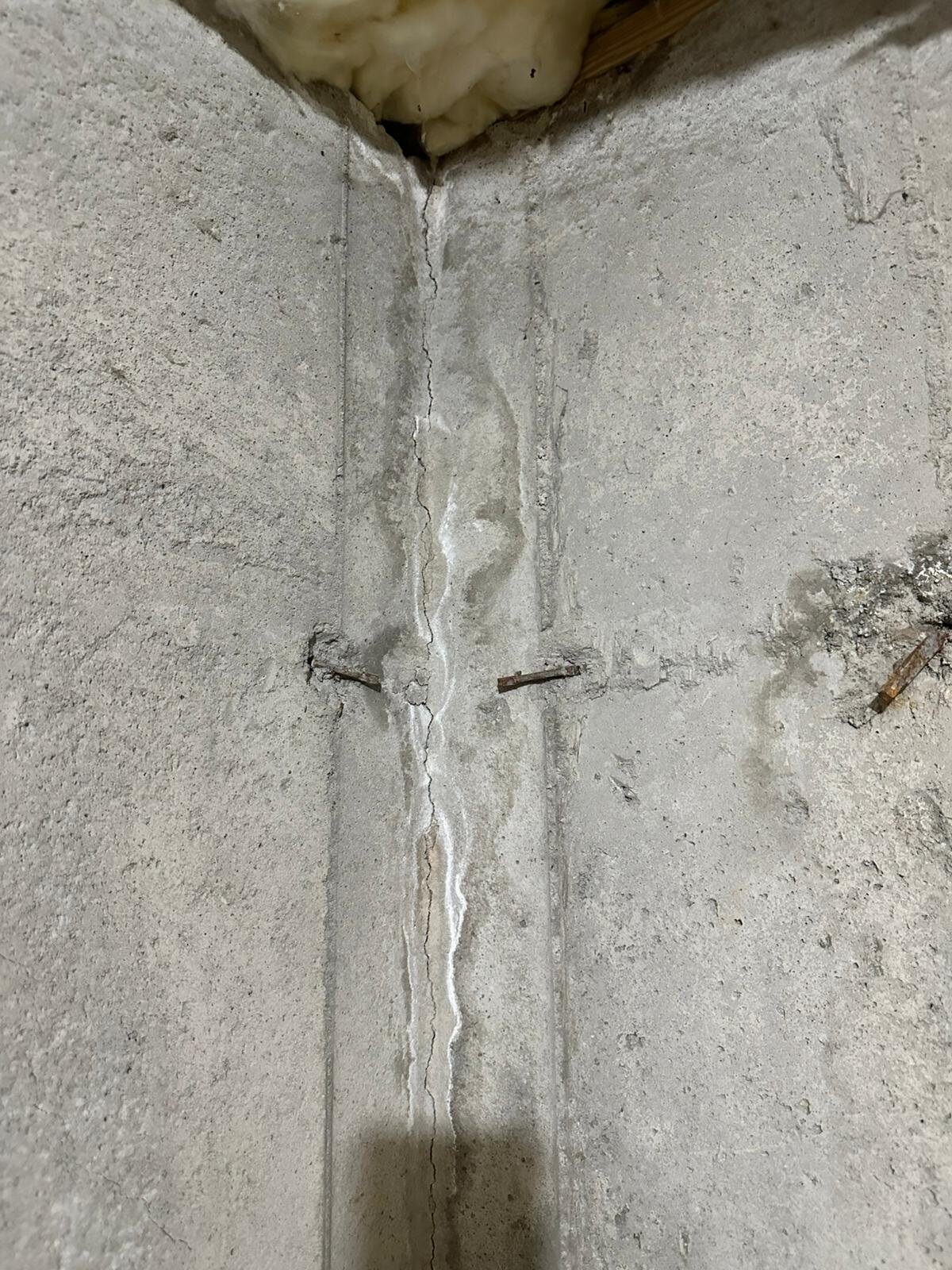
Polyurethane for cracks that leak, epoxy for dry cracks that need the wall's strength back. We decide on site by whether the crack is wet and whether it is still moving.
| Polyurethane | Structural epoxy | |
|---|---|---|
| Main job | Stop water | Restore strength |
| Best for | Leaking or damp cracks, cracks that still move a little with the seasons | Dry cracks, cracks an engineer wants bonded closed |
| How it behaves | Reacts with water and expands to fill the crack, stays flexible | Cures rigid and bonds both sides of the crack together |
| Wet crack at injection time | Works, water is what sets it off | Poor bond to wet concrete, a different resin is usually needed |
If an engineer has already looked at the house and called for structural epoxy injection, we follow the report. Engineers commonly reference ACI 224.1R, the American Concrete Institute guide to crack repair, and we price and perform the work to that spec.
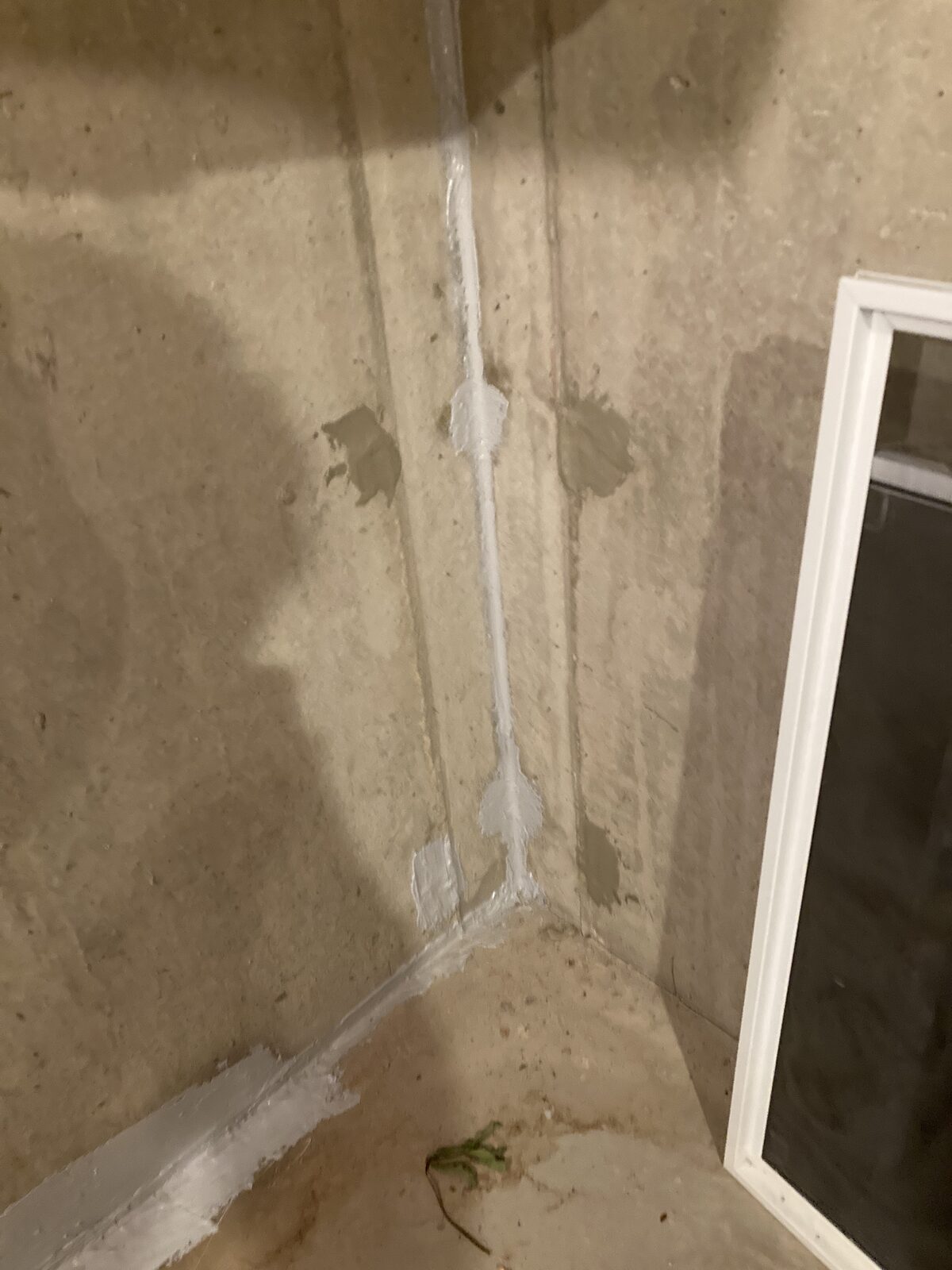
From inside the basement, in one visit for most homes: clean the crack, set ports along it, seal the face, pump resin in from the bottom up until it fills the crack through the wall, then remove the ports.
A typical crack takes a few hours. Several cracks in one basement are usually done in one or two working days. You need to clear stored items, shelving and anything else that is against the wall at the crack before we arrive.
When the inside of the wall is finished, blocked by a furnace or tank, or belongs to a condo unit we cannot enter, we repair the crack from outside: hand excavate along it below grade, clean it, seal it, and restore the ground.
Outside repairs suit condo buildings well, because the work does not need access to each unit. Ledge, boulders and buried utilities make digging slower and are priced separately if we hit them.
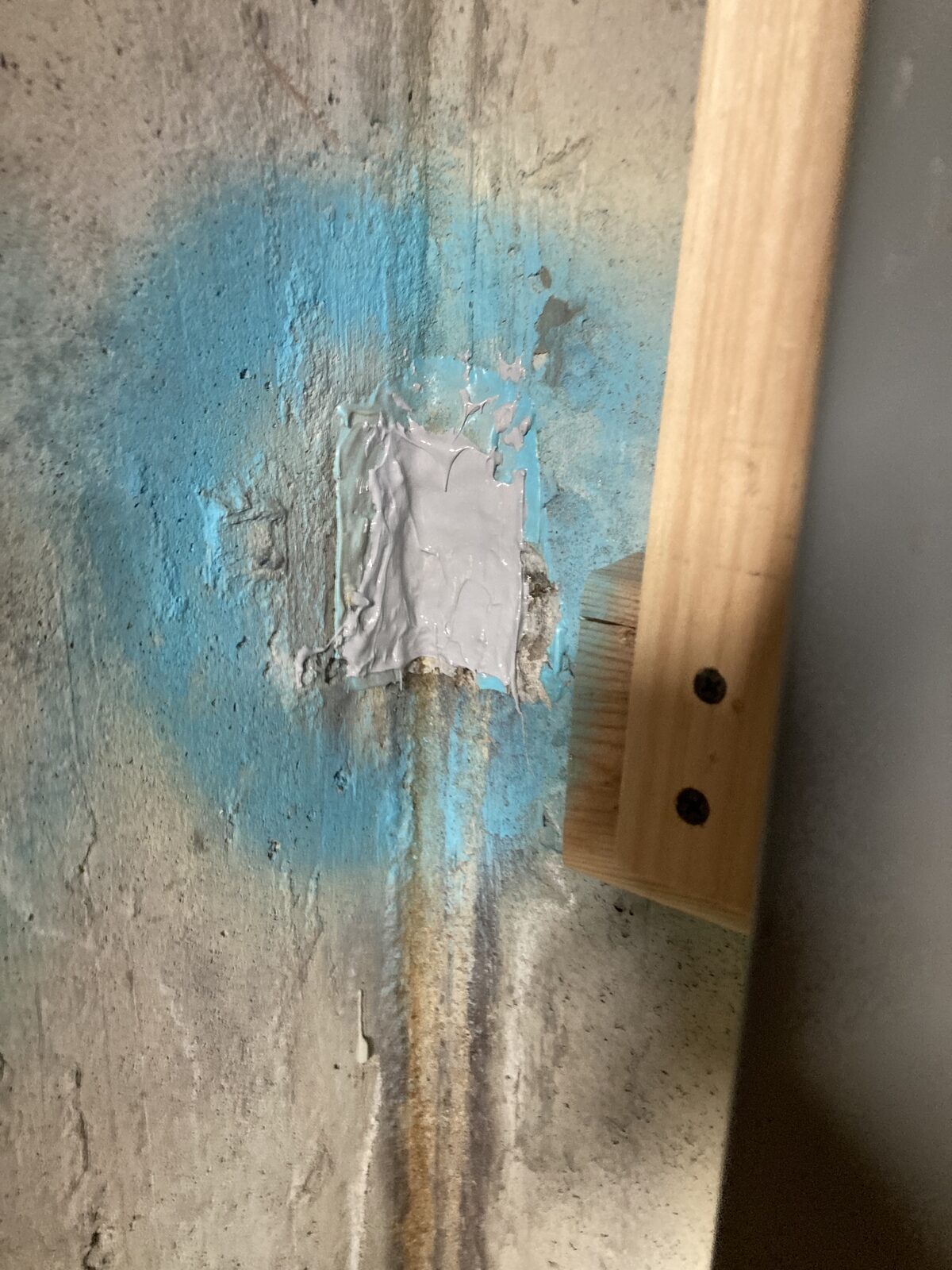
Caulk, hydraulic cement or a coat of waterproofing paint on the face of a crack only covers the surface. Water still travels through the crack inside the wall, finds the edge of the patch, and comes out beside it within a season or two.
We see the same pattern in a lot of basements: a crack that has been patched two or three times, each patch a little bigger than the last. The water was never stopped, only moved. Injection works because it fills the crack through the wall, so there is no path left for the water to follow.
Patches also make the real repair harder, because they have to be ground off before ports can be set. If you are going to patch a crack yourself as a stopgap, keep it small.
Injection seals and bonds a crack. It does not stop a wall that is still being pushed, and it does not fix water coming in everywhere else. Those cases need a different repair, and we will tell you before quoting injection.
Crack injection is priced by the crack: how many there are, how long they are, which resin they need, and whether we can reach them from inside. Every estimate is written and itemized, and simple jobs can often be priced from photos.
| Work | Typical range | Notes |
|---|---|---|
| Interior crack injection | About $750 to $2,100 per job | Most single-crack and two-crack jobs; more and longer cracks cost more |
| Outside excavate-and-seal crack | About $1,300 to $1,750 per crack | Hand dig to about 2 feet; deeper digs, ledge or membrane cost more |
Ranges come from our own written proposals for Eastern Massachusetts jobs in 2025 and 2026. They are a guide, not a quote: your price depends on what we find on site.
The main things that move the price:
Crack injection is indoor work, so we schedule it through the winter, ahead of spring thaw when most cracks leak.
We don't publish client names or addresses.
We repair foundation cracks across Eastern Massachusetts, from Braintree and the South Shore through Norfolk County and south toward Plymouth and Bristol counties. Pick your town for recent nearby jobs, local housing age and the building department contact. Our office is at 150 Grossman Drive, Suite 205, Braintree, MA 02184.
Tell us about the project and where it is. We respond within one business day.