
Eastern MassachusettsMA HIC #2039121-Year Warranty

Foundation Repair in Eastern Massachusetts

Concrete Solutions & Waterproofing repairs cracked, leaking and deteriorated foundations in Eastern Massachusetts: crack injection from inside the basement, excavating and sealing cracks from outside, repointing fieldstone and block walls, patching voids and openings, and pouring new concrete piers and footings. We look at the wall first and tell you which repair it actually needs.

Free written estimates. Licensed and insured. Standard 1-year warranty.

Is my foundation crack serious?

Most cracks in Massachusetts foundations are not structural. Thin vertical cracks in a poured wall are usually shrinkage and matter because they leak. Horizontal cracks, stair-step cracks in block, cracks wider at one end, and walls that bow or lean are the ones that need a closer look.

Common foundation cracks, what they usually mean, and the usual repair
What you seeWhat it usually meansUsual repair
Thin vertical crack in a poured wall, often near a window or cornerShrinkage as the concrete cured. Not structural, but a common leak pathCrack injection from inside
Crack about 1/8 inch or wider, or one that was patched and opened againMovement after the pour. Worth checking whether it is still movingStructural epoxy injection, or an engineer's review first
Stair-step crack along the mortar joints of a block wallSettlement or pressure on the wallMortar and block repair once the cause is understood
Horizontal crack, or a wall that bows or leans inwardSoil or frost pressure pushing on the wallEngineer's evaluation before any repair
Sand on the floor, loose stones, missing mortar in a stone foundationOld lime mortar washing out of a fieldstone wallFieldstone repointing
Crumbling concrete, gaps or holes at the base of the wall or the sillWater and freeze-thaw damage over timeClean back to sound concrete and rebuild with repair mortar

Send a photo with a coin or tape measure against the crack. We can usually tell from that whether it is a water problem, a masonry problem, or something an engineer should see first.
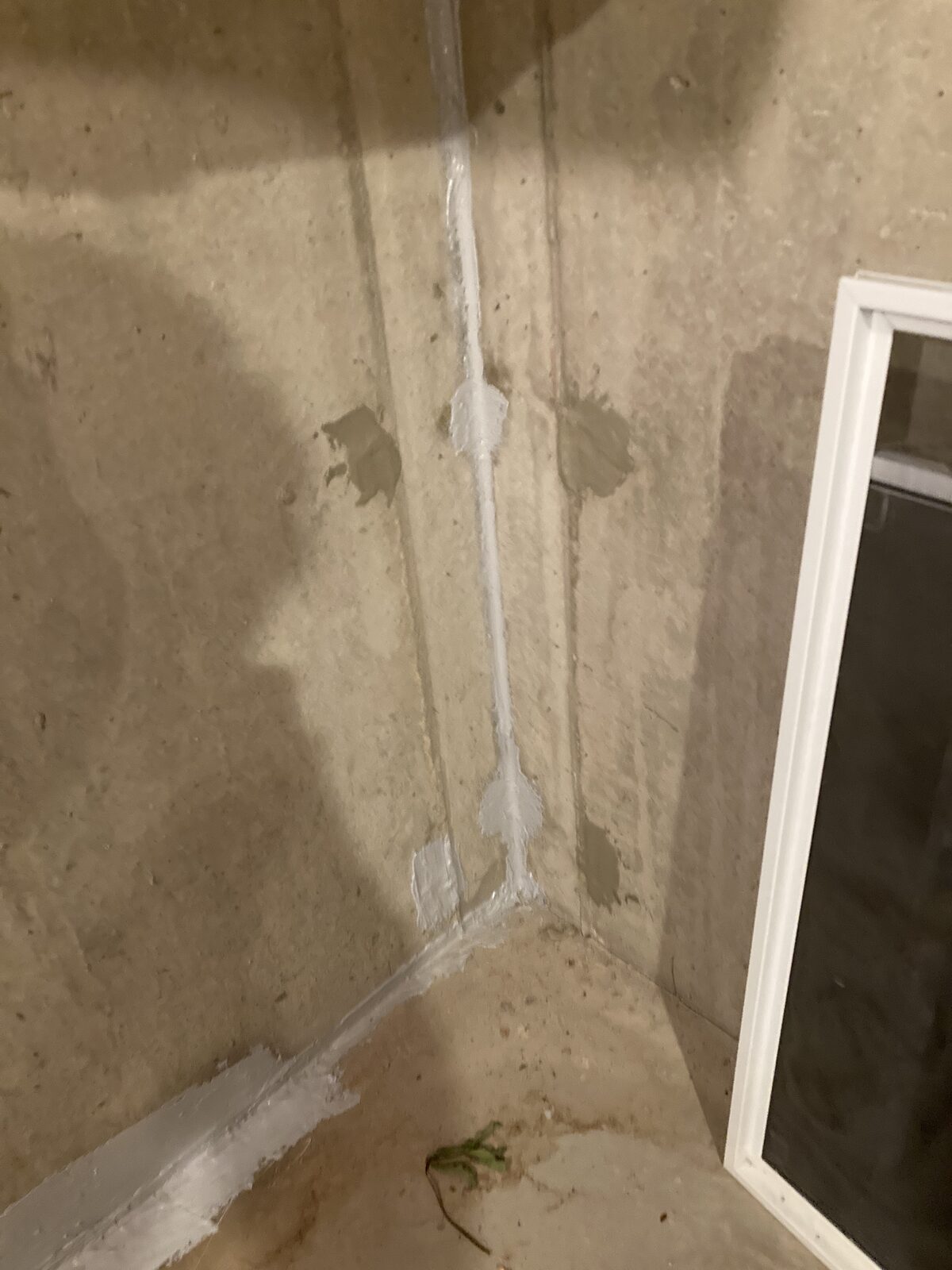
Vertical crack in a poured concrete basement wall sealed with surface paste over injection ports, with the wall-to-floor joint sealed
A poured-wall crack and the joint at the floor sealed from inside the basement.

How are poured concrete foundation cracks repaired?

From the inside, by injecting resin through the full thickness of the wall: rigid epoxy for dry cracks that need strength back, flexible polyurethane for cracks that leak. When the inside is finished or blocked, we dig down outside and seal the crack from the exterior.

  1. Clean the crack. Old caulk, failed patches and loose material are ground off back to sound concrete.
  2. Set ports and seal the face. Injection ports go along the full length of the crack and the surface is sealed with epoxy paste so the resin stays in the wall.
  3. Inject from the bottom up. Resin is pumped in under pressure, port by port, until the crack is filled through the wall.
  4. Finish. Once cured, the ports come off and the surface seal is ground flush.

When an engineer has already inspected the house, we follow the report. Structural epoxy injection is commonly specified to ACI 224.1R, the American Concrete Institute guide to crack repair, and we price and perform the work to that spec.

Outside repair. Where a crack cannot be reached from inside, for example behind a finished wall or at a condo unit, we hand excavate along the crack below grade, clean it, fill it with hydraulic cement above and below grade, then backfill, compact and restore the mulch or lawn. See foundation crack injection for more on resin choice.

Repairing fieldstone and stone foundations

Older homes across the South Shore sit on fieldstone foundations laid in lime mortar that washes out over decades. The fix is repointing: raking out the failed mortar and packing the joints full depth with new mortar, resetting loose stones as we go.

  • Rake out to sound material. Loose, deteriorated and missing mortar is ground and raked out until we reach mortar that is still holding.
  • Repoint full depth. Joints are cleaned and packed solid with masonry mortar, not skimmed on the surface, so water cannot run behind the new work.
  • Reset loose stones. Stones that have shifted or come loose in the joints are reset in mortar.
  • Inside, outside or both. We repoint interior walls in the basement and the exposed face of the foundation outside. Above grade, Type S mortar tooled to match the existing joints is typical.
  • Waterproof mortar where it leaks. At damp interior areas we can use a waterproofing mortar mix in place of standard mortar.

Mortar work needs temperatures above 40 degrees, so exterior repointing is best scheduled before deep winter. Interior basement work can usually continue through the cold months. More detail on fieldstone and cobblestone basement repair and repointing.
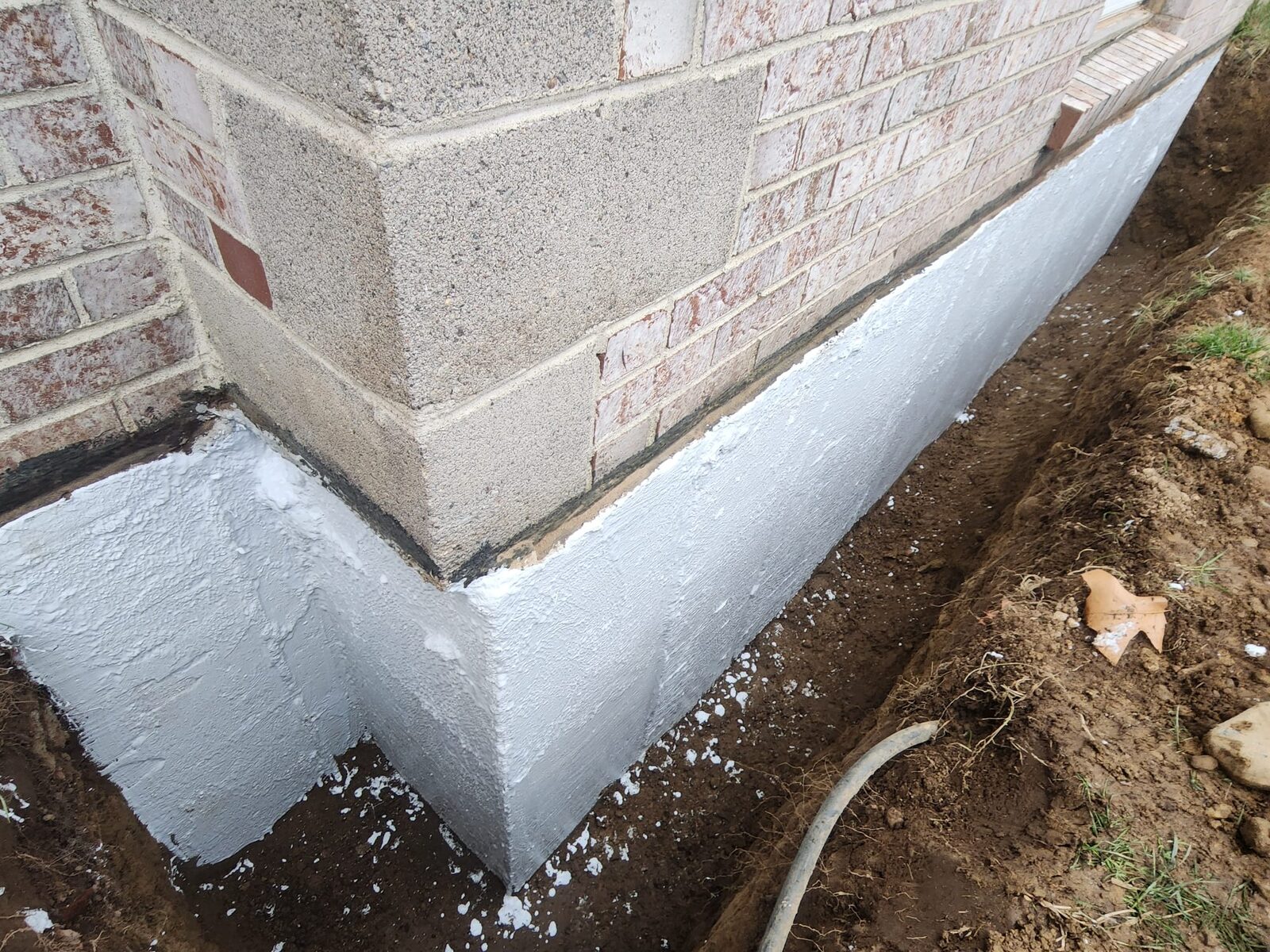
Foundation wall excavated along the outside of a brick house and coated below grade
Outside repair: the foundation dug out along the wall and coated below grade before backfill.

Block walls, voids and crumbling concrete

Damaged sections of block walls, holes and gaps at the base of the wall, and crumbling concrete are cut back to sound material and rebuilt with non-shrink or structural repair mortar, tooled to shed water.

Common repairs we do on foundation walls besides cracks:

  • Openings and voids. Holes at the base of the building or through the wall are cleaned back to sound concrete and filled solid with non-shrink repair mortar or concrete.
  • Gaps at the sill. The space between the foundation and the sill or facade is closed so the area is weather-tight and animals cannot get in.
  • Stone coping and facade. Fallen coping stones are reset in a full bed of mortar and the brick and stone joints around them are repointed.
  • Block walls. Failed mortar joints and damaged block are repaired. For new block walls see block and CMU construction.

New concrete piers and footings

Decks, porches and additions that are settling or being rebuilt often need new concrete piers or footings. We excavate, form and pour them at frost depth or down to ledge, finished level to receive the post bases.

  • Sonotube piers. Excavated to frost depth (about 4 feet in this area) or to ledge, formed with sonotube, filled continuously and finished level for the post base.
  • Spread footings. Bell-shaped footing forms are used where the load needs a wider bearing area at the bottom.
  • Ledge. Where piers land on ledge or large boulders, rebar is set into drilled holes with structural epoxy adhesive to pin the pier to the rock.
  • Helical piles. On sites with poor soil, an engineer may specify helical piles. Those are installed by a specialty contractor, and we pour the concrete piers and footings over them.

Footings and piers for decks and additions usually need a building permit and often an engineer's design. Each town page lists the local building department.
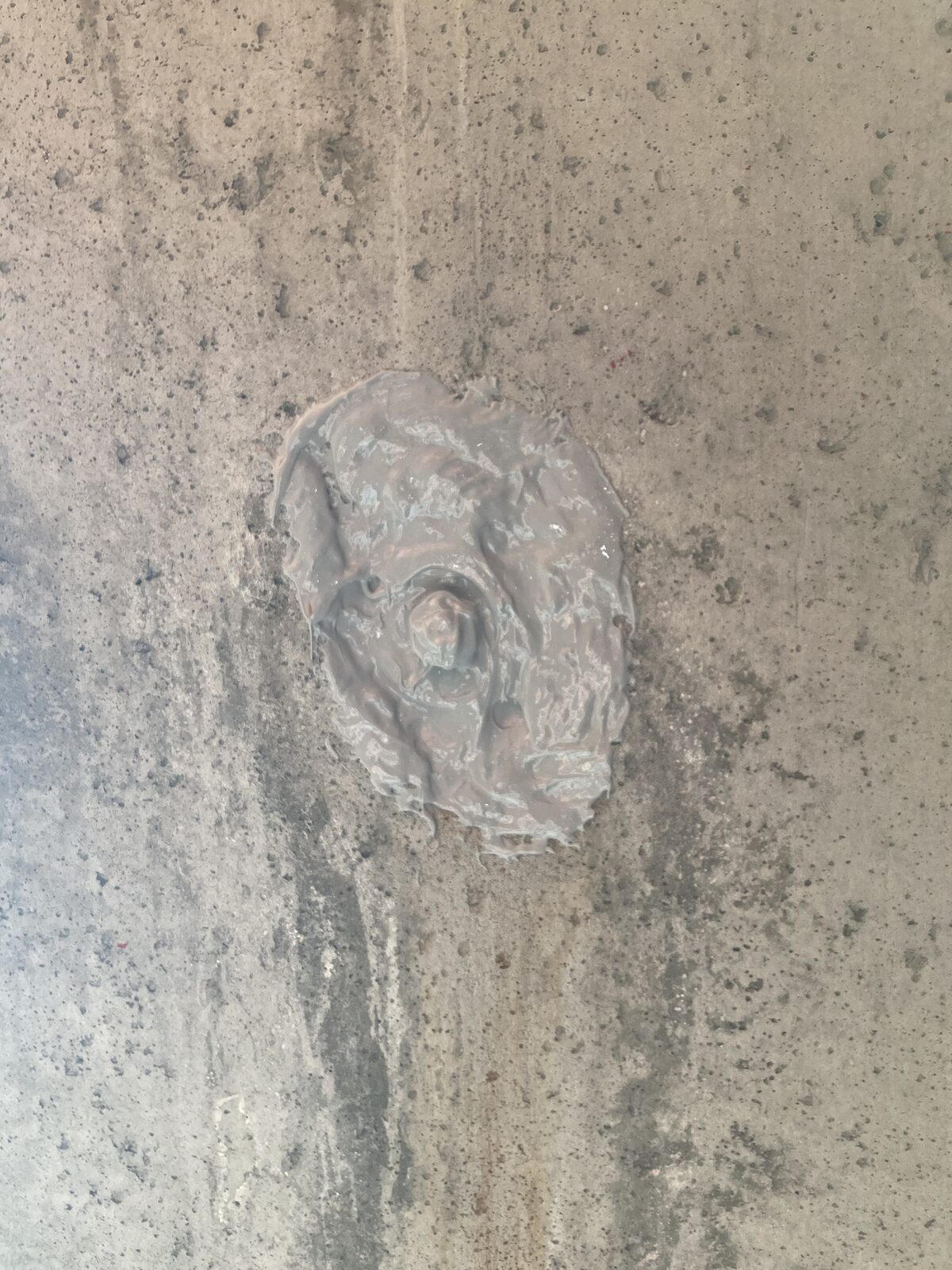
Form tie hole in a poured concrete foundation wall sealed with repair material
A leaking form tie hole in a poured foundation wall, sealed.

When does a foundation need an engineer?

Call an engineer before any repair when a wall is bowing or leaning, has a horizontal crack, or has cracks that keep growing. The engineer decides what the wall needs; we then do the concrete and masonry work the report calls for.

We do not provide structural engineering, and we do not install wall anchors, wall bracing or underpinning systems. What we do is read an engineer's report, price exactly what it calls for, and do the concrete and masonry repair: injection, patching, repointing, new footings and piers. If we see a sign on the first visit that the wall needs an engineer, we tell you before quoting anything.

Condo associations and property managers often already have an engineer's report or a work order. Send it with the request and we can usually price from it before visiting.

Fix the water around the foundation first

A lot of foundation damage in Massachusetts starts with water: downspouts dumping at the wall, driveways and walks pitched toward the house, and frost working into wet joints. Fixing the water is often the cheapest part of the repair.

  • Downspouts. A rain leader that discharges at the foundation is one of the most common causes of a wet, deteriorating wall. Redirecting it away from the house is a small job that should come first.
  • Grading and paving. Driveways, walks and patios that pitch toward the house send water straight at the foundation.
  • Interior water. If water still gets in after the wall is repaired, an interior drain and sump may be needed. See basement waterproofing.

We would rather fix the surface water and repoint the wall than sell you a full waterproofing system the house does not need.

What does foundation repair cost?

It depends on the type of repair, how much wall is involved, and whether we can work from inside or have to dig outside. Small crack and patch repairs are usually one working day; full repointing of a basement is several days. Every estimate is written and itemized.

Typical foundation repair prices from our recent proposals
WorkTypical rangeNotes
Interior crack injectionAbout $750 to $2,100 per jobMost single-crack and two-crack jobs; more and longer cracks cost more
Outside excavate-and-seal crackAbout $1,300 to $1,750 per crackHand dig to about 2 feet; deeper digs, ledge or membrane cost more
Foundation repointingAbout $11 to $28 per square foot of wallFieldstone and brick, inside or outside; small patches carry a minimum charge
Interior wall coating or pargingAbout $4 to $11.50 per square footHigher end is stone-wall slurry and membranes

Ranges come from our own written proposals for Eastern Massachusetts jobs in 2025 and 2026. They are a guide, not a quote: your price depends on what we find on site.

The main things that move the price:

  • Type of repair. Injection, excavate-and-seal, repointing, patching or new footings.
  • How much. Linear feet of crack, or square feet of wall to repoint.
  • Inside or outside. Outside crack repair adds hand excavation and restoring the ground; ledge, boulders or utilities make digging slower.
  • Access. Finished basements, stored items, HVAC units and decks over the work area.
  • Engineering and permits. Structural repairs and new footings may need an engineer's design or a building permit.

Pricing from photos is possible for simple repairs. If what we find on site is different, we review the change with you before doing anything.

FAQ

Foundation Repair: common questions

How do I know if my foundation crack is structural?
Thin vertical cracks in a poured concrete wall are usually shrinkage and are a leak problem, not a structural one. Horizontal cracks, stair-step cracks in block, cracks wider at one end, and walls that bow or lean should be looked at more closely, and some need an engineer. Send us a photo with a coin or tape against the crack and we will tell you which you have.
Do you have to dig up my yard to repair a foundation crack?
Usually not. Most poured-wall cracks are injected from inside the basement. We dig outside only when the crack cannot be reached from inside, for example behind a finished wall, and then we hand excavate along the crack, seal it, and restore the ground.
Can you repair a fieldstone foundation?
Yes. Fieldstone foundations lose their lime mortar over time. We rake out the failed mortar, repoint the joints full depth, and reset loose stones, inside the basement, outside, or both.
Do you work from an engineer's report?
Yes. When an engineer has inspected the foundation we price and perform exactly the repair the report calls for, such as structural epoxy injection to ACI 224.1R. We do not provide engineering ourselves.
Do you install wall anchors, bracing or underpinning?
No. If a wall is bowing or needs underpinning we will tell you to have an engineer look at it first. We do the concrete and masonry repair, new footings and piers, and work alongside specialty contractors where a design calls for helical piles.
Can foundation repair be done in winter?
Interior work like crack injection and basement repointing can be done through the winter. Exterior mortar work needs temperatures above 40 degrees, so we schedule it before deep winter or in spring.
Do you repair foundations for condo associations?
Yes. A large share of our foundation and masonry work is for condo communities and property managers. We can price from a work order, photos or an engineer's report and provide written, itemized estimates for board approval.
Do you warranty foundation repairs?
Yes. Our standard 1-year warranty on materials and workmanship applies to all services.
Service area

Where we repair foundations

Our office is in Braintree, and we repair foundations for homeowners, condo associations and property managers across the South Shore, Norfolk County and south toward Plymouth and Bristol counties. Pick your town for recent nearby jobs, local housing age and the building department contact. Our office is at 150 Grossman Drive, Suite 205, Braintree, MA 02184.

South Shore

Norfolk County and MetroWest

Southeastern Massachusetts

Get a free estimate

Get a free foundation repair estimate

Tell us about the project and where it is. We respond within one business day.

  • Free, written estimate
  • MA HIC #203912 · licensed & insured
  • Local, licensed, and dependable
  • Standard 1-year warranty on all services
Or call now (774) 464-3682

By submitting, you agree to be contacted by Concrete Solutions & Waterproofing about your project.

Related services

Related work we do